
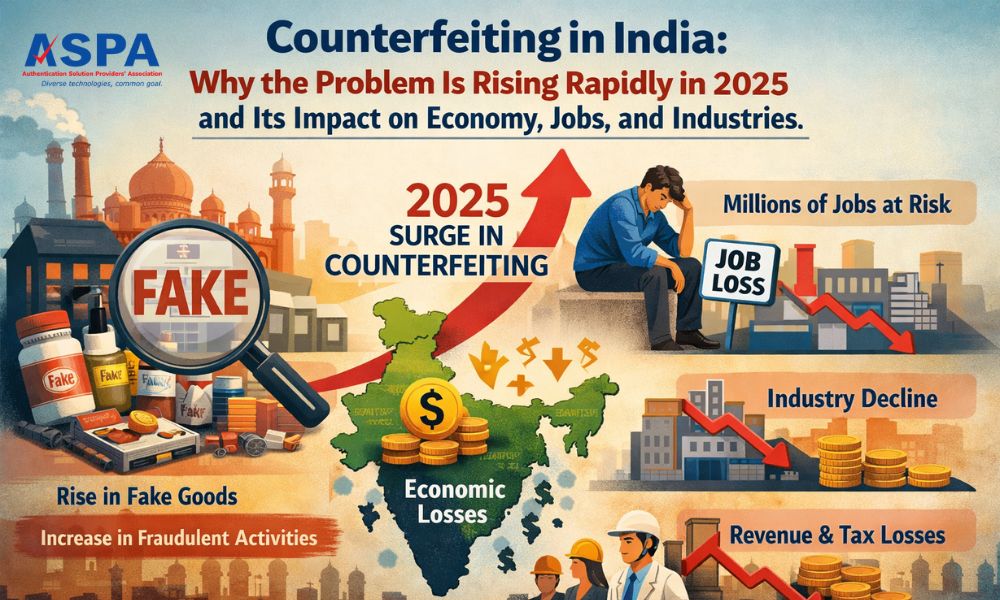
Counterfeiting has become one of the fastest-growing illegal activities in the country, making Counterfeiting in India a serious concern for businesses, consumers, and policymakers alike. From fake medicines and electronics to counterfeit auto parts and luxury goods, the scale and sophistication of fake products have increased sharply in recent years. In 2025, this issue is no longer limited to street markets; it has expanded into online platforms, supply chains, and even export channels. Understanding why counterfeiting is growing, how big the problem really is, and which sectors are most affected is essential to tackling this challenge effectively.
Why Is Counterfeiting Growing Rapidly in India in 2025?
Several interconnected factors are driving the rapid rise of counterfeiting in India in 2025.
First, digital commerce and social media selling have made it easier for counterfeiters to reach customers directly. Fake sellers can quickly create online storefronts, advertise on social platforms, and disappear before enforcement agencies can take action. This speed and anonymity favor illegal operations.
Second, price-sensitive consumers play a major role. With inflation and rising living costs, many buyers look for cheaper alternatives, often unknowingly purchasing counterfeit products. In some cases, consumers knowingly choose fakes because they appear similar to branded goods at a fraction of the price.
Third, complex supply chains make monitoring difficult. India’s vast manufacturing and distribution networks create loopholes where fake goods can be mixed with genuine products. Poor traceability and weak verification systems allow counterfeit items to pass as originals.
Finally, limited awareness and enforcement gaps add to the problem. While laws exist, enforcement can be slow due to lack of resources, technical expertise, and coordination between agencies. Counterfeiters exploit these gaps to scale their operations.
How Big Is the Counterfeiting Problem in India Today?
The counterfeiting problem in India has grown to alarming levels. It affects domestic consumption as well as exports, damaging India’s reputation in global trade. Counterfeit goods are no longer limited to low-value items; they now include high-risk products like pharmaceuticals, medical devices, and automotive components.
Key indicators of the scale of the problem include:
- Rapid growth of counterfeit listings on e-commerce platforms
- Increasing seizures of fake goods by customs and law enforcement
- Rising consumer complaints related to product quality and safety
Experts believe that counterfeit trade now represents a significant percentage of certain product categories in the Indian market. The hidden nature of this illegal economy makes exact numbers difficult to calculate, but its impact is visible in declining brand trust, revenue losses, and safety risks.
Which Industries Are Most Affected by Counterfeit Products in India?
Counterfeiting in India impacts many sectors, but some industries suffer more than others due to high demand and brand value.
Most Affected Industries
- Pharmaceuticals and healthcare – Fake medicines and medical products pose serious health risks and can be life-threatening.
- Automotive and spare parts – Counterfeit brake pads, filters, and engine components compromise vehicle safety.
- Electronics and electrical goods – Fake chargers, batteries, and appliances increase fire and shock hazards.
- FMCG and personal care – Counterfeit cosmetics, packaged foods, and hygiene products affect daily consumer health.
- Luxury goods and apparel – Fake branded clothing, shoes, and accessories harm brand reputation and retail sales.
These industries face not only revenue losses but also long-term damage to consumer confidence and brand credibility.
How Do Counterfeit Goods Impact the Indian Economy and Jobs?
The economic impact of counterfeiting in India goes far beyond lost sales. It directly affects employment, government revenue, and long-term industrial growth.
Impact on the Economy
- Loss of tax revenue due to unreported and illegal sales
- Reduced investment as companies hesitate to expand in high-risk markets
- Lower innovation because brands lose incentives to invest in R&D
Impact on Jobs
Counterfeit trade hurts both skilled and unskilled workers. Legitimate manufacturers are forced to cut costs, reduce production, or shut down operations, leading to job losses. Small and medium enterprises (SMEs) are particularly vulnerable, as they lack the resources to fight counterfeiters.
In the long run, widespread counterfeiting weakens India’s manufacturing ecosystem and slows progress toward becoming a global manufacturing hub.
Role of ASPA Global in Combating Counterfeiting
Organizations like ASPA Global play a crucial role in addressing counterfeiting challenges worldwide, including in India. ASPA Global focuses on anti-counterfeiting awareness, brand protection strategies, and collaboration between businesses, enforcement agencies, and policymakers.
By promoting best practices such as authentication technologies, supply chain transparency, and consumer education, ASPA Global helps companies safeguard their brands and supports governments in strengthening anti-counterfeiting frameworks. Their involvement highlights the importance of global cooperation in fighting a problem that crosses borders and industries.
What Can Be Done to Reduce Counterfeiting in India?
To effectively control counterfeiting in India, a multi-level approach is required.
Key Solutions
- Stronger enforcement and faster legal action
- Use of technology like QR codes, RFID, and serialization for product authentication
- Consumer awareness campaigns to educate buyers about risks of fake products
- Industry collaboration with global organizations and enforcement bodies
- Tighter control on online marketplaces and seller verification
When businesses, consumers, and authorities work together, the scale of counterfeiting can be significantly reduced.
Conclusion
Counterfeiting in India has evolved into a complex and deeply rooted problem in 2025, affecting industries, jobs, consumer safety, and the overall economy. The rapid growth of online commerce, price sensitivity, and enforcement gaps have allowed counterfeit goods to flourish. However, with stronger regulations, advanced technology, informed consumers, and support from organizations like ASPA Global, India can take meaningful steps toward controlling this threat. Addressing counterfeiting is not just about protecting brands—it is about ensuring safety, sustaining jobs, and securing India’s economic future.
 Counterfeiting in India | ASPA Global
Leave a comment